
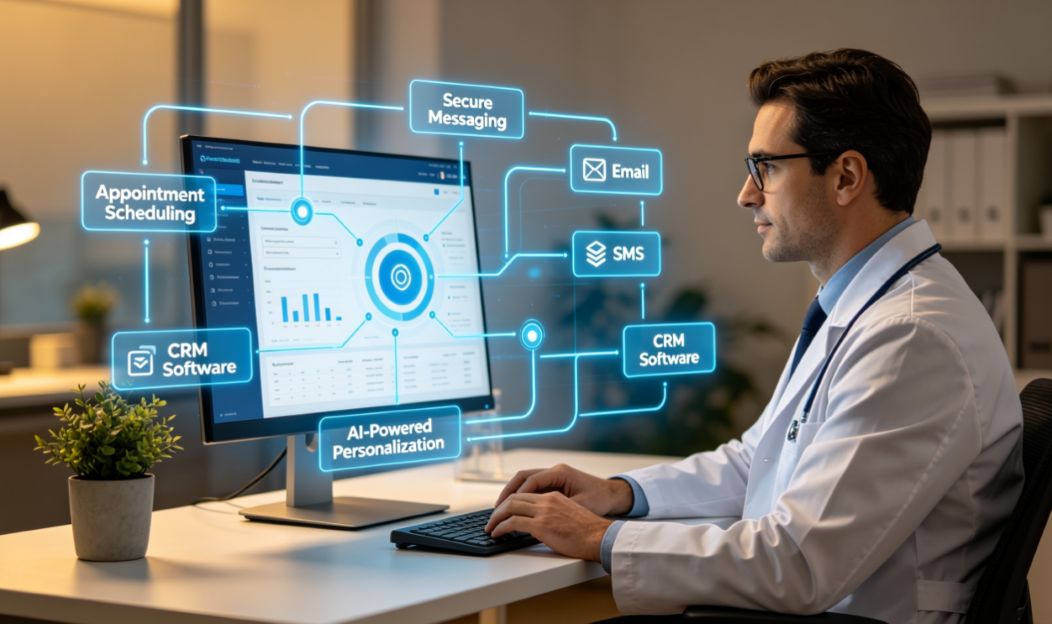
Healthcare organizations increasingly rely on digital communication to keep patients informed before, during, and after appointments. Research from the American Hospital Association and the Office of the National Coordinator for Health Information Technology (ONC) shows that digital engagement tools, including patient portals, reminders, and secure messaging, have become an important part of modern healthcare delivery. As patient expectations continue to grow, providers need efficient ways to deliver timely, relevant communication without overwhelming administrative teams.
Modern automation platforms help address this challenge by combining software logic with patient relationship workflows. Organizations exploring digital marketing for medical aesthetics often examine how automation supports appointment reminders, educational follow-ups, and personalized communication while maintaining consistency across multiple patient touchpoints. The same technical principles increasingly benefit many healthcare specialties that require efficient, scalable communication.
The Challenge of Personalized Communication at Scale
Patients expect messages that feel relevant to their individual needs. A first-time visitor may require educational content, while an existing patient may simply need a follow-up reminder or post-treatment instructions.
Sending every message manually quickly becomes impractical as patient volumes increase. Administrative staff must manage appointment scheduling, insurance questions, prescription requests, and numerous daily communications. Personalizing every email or text message without automation often consumes valuable time.
Studies published by the Agency for Healthcare Research and Quality (AHRQ) suggest that effective communication improves patient engagement and contributes to better care experiences. The challenge lies in maintaining that quality while serving hundreds or even thousands of patients.
How Automation Platforms Use Programming Logic
Marketing automation software relies on programming rules rather than manual decisions for every interaction. Developers create workflows that define what happens when specific conditions are met.
For example, a patient may submit an appointment request through a website. That single action can trigger several automated processes:
- Confirmation email generation
- Appointment calendar updates
- SMS reminder scheduling
- Patient portal invitation
- Follow-up educational content delivery
These workflows are powered by conditional logic. Software continuously evaluates rules such as:
- If a patient books a consultation, send confirmation immediately.
- If the appointment is seven days away, deliver preparation instructions.
- If the patient has not confirmed attendance, send a reminder.
- If the appointment is completed, schedule a satisfaction survey.
While these actions appear simple from the patient’s perspective, they rely on software code that connects databases, scheduling systems, communication platforms, and customer relationship management tools.
Programming Workflows Behind Personalized Messaging
Automation platforms integrate with multiple healthcare technologies through application programming interfaces, commonly known as APIs. These APIs allow separate software systems to exchange information securely.
For example, when scheduling software records a completed appointment, the API may notify the automation platform. The platform then determines which workflow applies to that patient.
Several pieces of information influence message personalization:
- Appointment type
- Patient history
- Previous interactions
- Preferred communication channel
- Location and time zone
- Language preferences
Rather than sending identical messages to every patient, the platform assembles content dynamically using stored information. The programming code inserts personalized fields such as patient names, appointment times, provider names, or recommended educational resources.
Reports from the Healthcare Information and Management Systems Society (HIMSS) indicate that interoperability between healthcare systems continues to improve through standardized APIs, making automated communication increasingly practical.
Benefits of Automated Patient Communication
Properly implemented automation provides advantages for both healthcare providers and patients.
Greater Efficiency
Routine communication requires fewer manual tasks. Administrative staff can focus on patient care instead of repeatedly sending reminders or confirmations.
Improved Consistency
Automation reduces the risk of forgotten follow-ups or inconsistent messaging. Every patient receives communication based on predefined rules.
Better Timing
Messages arrive when they are most useful. Appointment reminders, preparation instructions, and follow-up surveys can all be scheduled automatically.
More Relevant Information
Patients receive information connected to their specific healthcare journey instead of generic announcements. This relevance often improves engagement with educational materials and appointment preparation.
Research published in the Journal of Medical Internet Research has found that digital communication tools can improve patient engagement when implemented thoughtfully and supported by user-centered design.
The Limitations of Automation
Automation does not replace human judgment. Software follows predefined rules and cannot fully understand emotional context or unexpected situations.
For example, an automated reminder cannot recognize that a patient has experienced a medical emergency unless connected systems update that information. Human oversight remains necessary for sensitive conversations and complex clinical decisions.
Privacy presents another important consideration. Healthcare organizations handling patient information must comply with regulations such as the Health Insurance Portability and Accountability Act (HIPAA) in the United States. Secure data handling, encrypted communication, and appropriate access controls remain essential regardless of how advanced automation becomes.
Experts from the National Institute of Standards and Technology (NIST) also emphasize secure software development practices to reduce cybersecurity risks when healthcare systems exchange patient information through APIs.
Why Personalization Matters for Patient Experience
Personalized communication extends beyond using a patient’s first name in an email. Effective systems recognize where each individual is within the care journey and provide information that matches that stage.
A prospective patient may appreciate educational resources before scheduling a consultation. Existing patients often benefit from recovery instructions, medication reminders, or preventive care recommendations after treatment.
Healthcare organizations serving highly specialized fields, including cosmetic medicine and wellness services, frequently rely on these tailored communication strategies to guide patients through consultations, treatment planning, follow-up care, and long-term engagement. The underlying software architecture remains similar across many healthcare environments.
The Growing Role of Artificial Intelligence
Artificial intelligence is expanding the capabilities of marketing automation platforms. Traditional automation follows fixed rules created by developers, while AI systems can analyze larger datasets to identify patterns and improve recommendations.
Machine learning models may predict when patients are most likely to open emails, identify communication preferences, or recommend educational content based on previous interactions.
Findings from the World Health Organization recognize the growing role of artificial intelligence in healthcare while emphasizing the importance of transparency, patient privacy, and human oversight. Responsible implementation requires careful governance rather than relying entirely on automated decision-making.
Developers are increasingly combining rule-based workflows with AI-assisted decision support. Instead of replacing traditional automation, artificial intelligence enhances personalization by making recommendations while allowing healthcare professionals to retain control over clinical decisions.
Looking Ahead
Marketing automation platforms have evolved into sophisticated communication systems built on programming logic, secure integrations, and data-driven workflows. Their purpose extends beyond saving administrative time. They help healthcare organizations deliver timely, relevant information that supports stronger patient engagement throughout the care journey.
Future developments will likely combine interoperable healthcare systems, improved API standards, and increasingly capable AI technologies. Even as these tools become more advanced, successful patient communication will continue to depend on accurate data, thoughtful software design, strong privacy protections, and meaningful human oversight. Technology can make communication more efficient, but trust remains the foundation of every patient relationship.